
"Assassin's Creed: 10 Historical Shifts"
Ubisoft has once again activated the Animus, transporting players back to Japan’s Sengoku Period with Assassin’s Creed Shadows. This installment features notable historical figures from 1579, including Fujibayashi Nagato, Akechi Mitsuhide, and the African samurai Yasuke, who served under Oda Nobunaga. Like its predecessors, the game intertwines these historical personalities with a narrative of revenge, betrayal, and murder, although the notion of Yasuke needing to kill to gather XP for a gold-tier weapon is a humorous twist on the genre's mechanics.
Assassin’s Creed is a master of historical fiction, crafting stories that blend historical events with a science fiction narrative about a secret society aiming to control the world using the mystical powers of a pre-human civilization. While Ubisoft’s open-world environments are deeply rooted in historical research, it's crucial to recognize that they are not intended as history lessons. The developers creatively alter historical facts to enhance the storytelling, resulting in numerous "historical inaccuracies" that we find intriguing. Here are ten standout moments where Assassin’s Creed reimagined the past.
The Assassins vs Templars War

Let's address the most significant fictional element first: the ongoing war between the Order of Assassins and the Knights Templar. Historically, there is no evidence to support this conflict. Both groups existed during different periods—the Assassins from 1090 AD and the Templars from 1118 AD—and were disbanded by 1312. The idea of a centuries-long feud between them is entirely fictional, inspired by conspiracy theories about the Templars. Their only common historical ground was during the Crusades, which only the first Assassin’s Creed game accurately reflects.
The Borgias and their Superpowered Pope

In Assassin’s Creed 2 and Brotherhood, Ezio battles the Borgia family, with Cardinal Rodrigo Borgia as the Templar Grand Master who becomes Pope Alexander VI. The game's plot involving the Borgias seeking the magical Apple of Eden and a pope with god-like powers is pure fiction, as the Templars were not active in the late 1400s. Moreover, the game's portrayal of the Borgias as villainous Renaissance gangsters, including the depiction of Cesare Borgia as an incestuous psychopath, diverges from historical records, which suggest a more nuanced view of the family.
Machiavelli, Enemy of the Borgias

Assassin’s Creed 2 and Brotherhood present Niccolò Machiavelli as Ezio's ally and leader of the Italian Assassin's Bureau. However, this portrayal contradicts Machiavelli's real-life philosophies, which favored strong authority, clashing with the Assassin's Creed. Additionally, Machiavelli's documented respect for Rodrigo Borgia and his diplomatic service under Cesare Borgia further highlight the game's deviation from historical accuracy.
The Incredible Leonardo da Vinci and his Flying Machine

Assassin’s Creed 2's depiction of Leonardo da Vinci as Ezio's friend captures his wit and charisma but alters his timeline. The game has him move from Florence to Venice in 1481, whereas historically, he went to Milan in 1482. While da Vinci's engineering designs, including a machine gun and tank, are brought to life in the game, the flying machine used by Ezio remains a flight of fancy, as there's no evidence that any of Leonardo's designs ever flew.
The Bloody Boston Tea Party

The Boston Tea Party, a pivotal event in the American Revolution, was historically a non-violent protest. Assassin’s Creed 3, however, transforms it into a violent confrontation led by Connor, who single-handedly slaughters British guards. The game also attributes the planning to Samuel Adams, despite historians' uncertainty about his involvement, showcasing Ubisoft's creative liberty with history.
The Lone Mohawk

In Assassin’s Creed 3, Connor, a Mohawk, fights alongside the Patriots against the British, which contradicts historical alliances as the Mohawk were aligned with the British. While there were rare instances like Akiatonharónkwen (Louis Cook), who fought for the Patriots, Connor's allegiance represents a "what if?" scenario that Assassin’s Creed often explores.
The Templar Revolution

Assassin’s Creed Unity's portrayal of the French Revolution as a Templar conspiracy oversimplifies the complex causes of the revolution, including famine, which was due to natural disasters rather than a manufactured crisis. The game's focus on the Reign of Terror as the entirety of the revolution also misrepresents the broader historical context.
The Controversial Killing of King Louis 16

Unity's depiction of King Louis 16's execution as a close vote swayed by a Templar's decision misrepresents the historical majority vote of 394 to 321 in favor of execution. The game also downplays the widespread anger towards the French aristocracy and King Louis's attempt to flee France, which contributed to his treason charges.
Jack the Assassin

Assassin’s Creed Syndicate reimagines Jack the Ripper as a rogue Assassin who seizes control of the London Brotherhood. This narrative twist, where Jack is trained by Jacob Frye and killed by his sister Evie, is a stark departure from the historical mystery surrounding the real Jack the Ripper, whose identity and motives remain unknown.
The Assassination of the Tyrant Julius Caesar

Assassin’s Creed Origins rewrites the assassination of Julius Caesar, portraying him as a proto-Templar whose death prevents global tyranny. Historically, Caesar's reforms aimed at land redistribution for the poor and soldiers, contradicting the game's depiction of his adversaries as fighting for the people. The assassination led to the Liberators' Civil War and the rise of the Roman Empire, a far cry from the victory portrayed in the game.
The Assassin’s Creed series meticulously crafts historically inspired worlds, yet these are often filled with creative liberties rather than strict historical accuracy. This is the essence of historical fiction, and it's perfectly acceptable for a video game. What are your favorite instances where Assassin’s Creed has taken artistic license with history? Share your thoughts in the comments below.
-
 This week's free game lineup on the Epic Games Store mobile app is here, and it features DC Heroes United alongside Shapez.Whether you love factory simulations or superhero action, there's something for everyone. The games are free to claim from JuneAuthor : Andrew Apr 24,2026
 -
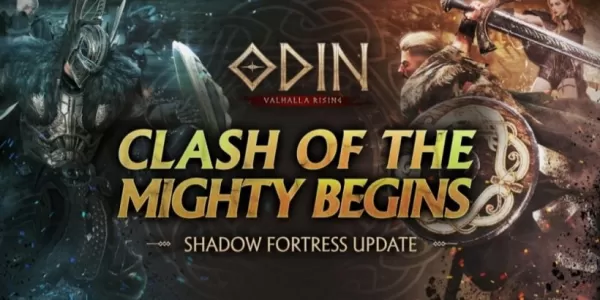 Shadow Fortress is the new elite dungeon featuring high-stakes encountersNew Imprint System lets you push your stats furtherThe Summer Island event features loads of rewards to gatherOdin: Valhalla Rising is turning up the heat this summer with its sAuthor : Camila Apr 22,2026







- Retro-Style Arcade Racer Victory Heat Rally Is Coming To Mobile Soon Via Crunchyroll!
- DISCOVERY CHANNEL TO UNVEIL CROSSOVER IN 'Reverse: 1999' 2.0
- Crunchyroll Game Vault adds Battle Chasers: Nightwar, Dawn of the Monsters, Evan’s Remains and more
- Hotta Studio's Open-World RPG, Neverness to Everness, Announced
- Military Strategy Game Warpath Launches a Navy Update with 100 New Ships
- Golden Joystick Awards 2024 Was a Big Showing for Indie Games