
Epic's Tim Sweeney Announces Fortnite's Return to U.S. iPhones After Nearly 5 Years
Exciting news for Fortnite fans in the U.S.—the game is set to make its return to iPhones and the iOS App Store next week, following a major court ruling that could reshape how mobile games are distributed. Tim Sweeney, CEO of Epic Games, confirmed the development after a U.S. Federal District Court in California ruled that Apple wilfully violated a court order from the original Epic vs. Apple case. That order required Apple to allow developers to provide alternative payment options directly within their apps, bypassing Apple’s traditional 15-30% commission fee.
In a bold move, Sweeney took to social media to extend what he called a “peace proposal” to Apple. He stated that if Apple agrees to implement the court-mandated, friction-free, and Apple-tax-free payment system globally, Epic will bring Fortnite back to the App Store worldwide and cease all ongoing legal disputes regarding app store policies. This marks a significant shift in strategy after years of intense litigation.
In an earlier report by IGN from January, it was revealed that Sweeney had invested billions into this legal battle against both Apple and Google, viewing it as a long-term necessity for the future of the Epic Games Store and Fortnite. At the time, he expressed confidence in Epic's financial ability to sustain the fight for many years ahead.The core of the dispute has always been about control and cost. Epic strongly opposes the standard 30% fee charged by Apple and Google on in-app purchases and prefers to operate Fortnite through its own platform—the Epic Games Store—without interference. The conflict reached a peak in 2020 when Fortnite was removed from both iOS and Android platforms due to Epic’s attempt to introduce direct payments outside of the app stores' control.
Now, nearly five years later, Fortnite is finally coming back to iPhones in the U.S., signaling a turning point in the company’s broader campaign.
 Tim Sweeney remains committed to challenging the dominance of Apple and Google in the app distribution space. Photo by SeongJoon Cho/Bloomberg.
Sweeney celebrated the recent court decision with a strong statement: “NO FEES on web transactions. Game over for the Apple Tax.” He added, “Apple’s 15-30% junk fees are now just as dead here in the United States of America as they are in Europe under the Digital Markets Act. Unlawful here, unlawful there.”
The ruling was not only a win for Epic but also a stern warning to Apple. U.S. District Judge Yvonne Gonzalez Rogers referred Apple and Alex Roman, the company’s Vice President of Finance, to federal prosecutors for a criminal contempt investigation. She accused Apple of providing misleading testimony and outright falsehoods during compliance discussions, calling the situation a violation of the court’s injunction—not just a misinterpretation, but a deliberate disregard.
Apple responded with a firm rebuttal, stating, “We strongly disagree with the decision. We will comply with the court’s order and we will appeal.”
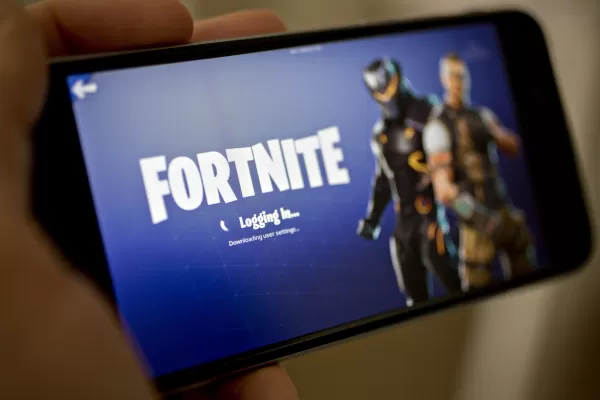 Fortnite’s return to iPhones in the U.S. marks a milestone after years of legal struggle. Photographer: Andrew Harrer/Bloomberg via Getty Images.
Prior to this breakthrough, most of Epic’s victories were confined to Europe, where the Digital Markets Act already curtailed Apple’s control over app distribution. In August last year, the Epic Games Store launched on iPhones in the EU and on Android devices globally, featuring Fortnite, Rocket League Sideswipe, and Fall Guys. However, getting Fortnite fully functional on mobile has proven difficult, with Epic reporting that up to 50% of users were deterred by complicated installation processes and warning screens.
Despite these advancements, the legal battles have taken a toll financially. In September 2023, Epic laid off 830 employees—roughly 16% of its workforce. However, by October of that year, Sweeney reassured the public that the company was now “financially sound,” with both Fortnite and the Epic Games Store setting new records in usage and performance.
-
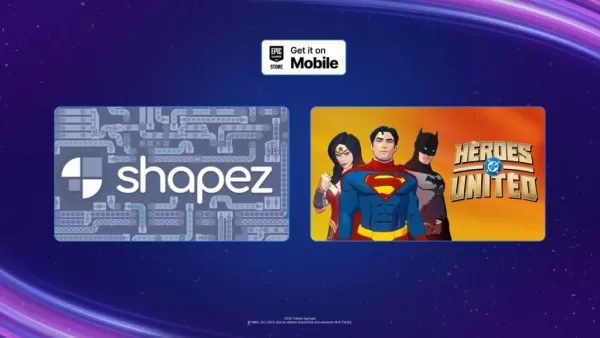 This week's free game lineup on the Epic Games Store mobile app is here, and it features DC Heroes United alongside Shapez.Whether you love factory simulations or superhero action, there's something for everyone. The games are free to claim from JuneAuthor : Andrew Apr 24,2026
 -
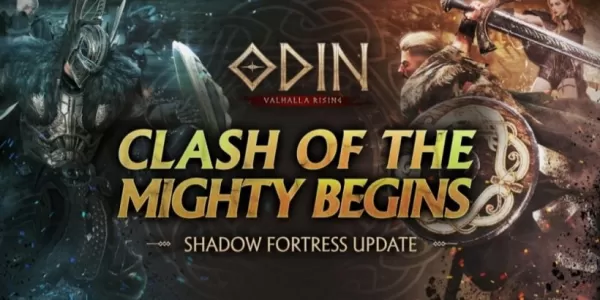 Shadow Fortress is the new elite dungeon featuring high-stakes encountersNew Imprint System lets you push your stats furtherThe Summer Island event features loads of rewards to gatherOdin: Valhalla Rising is turning up the heat this summer with its sAuthor : Camila Apr 22,2026
-
 Tic Tac Toe Online - XO GameDownload
 -
 Evil TowerDownload
 -
 Piano TutorialsDownload
 -
 AlgoRun : Coding gameDownload
 -
 Rummy 500 : The Rummy GameDownload
 -
 Ice Scream 8Download
 -
 Motocross Dirt Bike Race GameDownload
 -
 Ghost Merge offline games 2022Download
 -
 Abobus X Imposter FallsDownload
 -
 4 Fotos 1 PalabraDownload









- Retro-Style Arcade Racer Victory Heat Rally Is Coming To Mobile Soon Via Crunchyroll!
- DISCOVERY CHANNEL TO UNVEIL CROSSOVER IN 'Reverse: 1999' 2.0
- Crunchyroll Game Vault adds Battle Chasers: Nightwar, Dawn of the Monsters, Evan’s Remains and more
- Hotta Studio's Open-World RPG, Neverness to Everness, Announced
- Military Strategy Game Warpath Launches a Navy Update with 100 New Ships
- Golden Joystick Awards 2024 Was a Big Showing for Indie Games