
Bungie, Sony Face Fury Over Layoffs Amid CEO Splurge

Bungie is navigating a turbulent period marked by substantial workforce reductions and closer alignment with Sony Interactive Entertainment. This article explores the employee outcry, controversial spending by the CEO, and what lies ahead for the renowned game studio.
Bungie Implements Workforce Reductions Amid Economic Pressures
CEO Pete Parsons Announces 220 Job Cuts via Company Memo

Bungie's CEO Pete Parsons recently communicated significant organizational changes through an official memo, citing escalating development costs, evolving industry trends, and persistent economic challenges. The announcement included immediate termination of 220 positions, affecting approximately 17% of the company's workforce. These measures aim to concentrate resources on core projects - Destiny and Marathon.
Parsons noted that the restructuring would span all organizational levels, including senior leadership. The company committed to providing comprehensive termination packages including severance, bonuses, and extended healthcare benefits for affected staff.
The timing of these cuts follows closely on the success of The Final Shape expansion. Parsons attributed the difficult decision to multiple factors: economic headwinds, industry-wide contraction, and performance issues with Destiny 2: Lightfall.

Parsons contextualized the layoffs by reviewing Bungie's strategic direction over the past five years, which included developing multiple franchise properties simultaneously. This ambitious expansion strained financial resources and organizational capacity, ultimately necessitating workforce reductions to maintain operations.
The memo concluded by reaffirming Bungie's commitment to quality content creation with its remaining 850 employees, while prioritizing support for departing team members during the transition period.
Organizational Shift Under PlayStation Studios Leadership

Bungie's acquisition by Sony Interactive Entertainment in 2022 initially preserved the studio's operational independence contingent upon meeting performance benchmarks. The recent failure to achieve these targets has triggered deeper integration with PlayStation Studios.
The transition process will see SIE CEO Hermen Hulst gradually assuming greater oversight of Bungie operations. As part of the realignment, 155 positions will transition to SIE's organizational structure over coming quarters. This strategic move aims to preserve key talent while leveraging Sony's corporate resources, with decisions reportedly originating from Bungie leadership rather than Sony executives.
A notable consequence involves the spin-off of an incubation project - an original sci-fi/fantasy action game - into a newly formed PlayStation Studios development team.

This organizational restructuring represents a fundamental shift for Bungie, which has maintained independent operations since separating from Microsoft in 2007. While integration promises greater financial stability and access to PlayStation's ecosystem, it significantly curtails Bungie's historic autonomy in creative and strategic decision-making.
The long-term implications for Bungie's creative culture and operational practices remain uncertain as the studio navigates this critical transition period under Hulst's leadership, with both Destiny and Marathon development continuing as priority projects.
Employee Dissent and Industry Backlash

The layoff announcement triggered immediate backlash from current and former employees, with criticism focusing on leadership decisions and perceived corporate priorities.
Dylan Gafner (known as dmg04), Destiny 2's Global Community Lead, characterized the cuts as "unjustifiable" in social media posts, lamenting the loss of exceptional talent while responsibility was placed on productive team members.
Technical UX designer Ash Duong expressed frustration about the disparity between corporate rhetoric regarding employee value and the reality of staffing reductions affecting key contributors.

Former employees escalated critiques of CEO Pete Parsons directly, with ex-global social media lead Griffin Bennett declaring "Pete is a joke," echoing similar sentiments from former Destiny 2 community manager Liana Ruppert calling for leadership changes.
Notable community figures like content creator MyNameIsByf joined the chorus of criticism, attributing Bungie's challenges to poor executive decision-making and advocating for management reforms to protect both employees and franchise integrity.
This widespread discontent reflects deep disillusionment within Bungie's workforce and player community, questioning leadership's stewardship of company culture and creative direction.
Executive Expenditures Raise Eyebrows

Public records reveal Parsons has invested over $2.3 million in classic automobiles since late 2022, including $500,000 following October 2023's workforce reductions.
Notable acquisitions include a $91,500 1961 Chevrolet Corvette just two months before the latest layoffs, along with other high-value vintage vehicles like a $205,000 1967 Jaguar XKE and $201,000 1971 Porsche 911S.
The significant personal expenditures have drawn criticism when juxtaposed against Parsons' recent statement about Bungie "running in the red," prompting questions about resource allocation and executive priorities.

Former Bungie community manager Sam Bartley publicly accused Parsons of dishonesty regarding the company's financial health, citing an invitation to view new executive vehicle acquisitions days before termination.
Observers note the absence of visible financial sacrifices from senior leadership - no reported salary reductions or equivalent austerity measures while implementing substantial workforce cuts, further fueling employee and community discontent regarding executive accountability.
-
 This week's free game lineup on the Epic Games Store mobile app is here, and it features DC Heroes United alongside Shapez.Whether you love factory simulations or superhero action, there's something for everyone. The games are free to claim from JuneAuthor : Andrew Apr 24,2026
 -
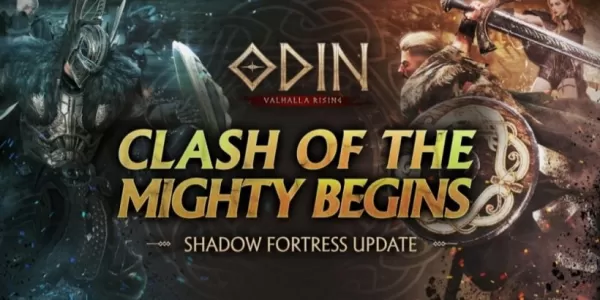 Shadow Fortress is the new elite dungeon featuring high-stakes encountersNew Imprint System lets you push your stats furtherThe Summer Island event features loads of rewards to gatherOdin: Valhalla Rising is turning up the heat this summer with its sAuthor : Camila Apr 22,2026
-
 Tic Tac Toe Online - XO GameDownload
 -
 Evil TowerDownload
 -
 Piano TutorialsDownload
 -
 AlgoRun : Coding gameDownload
 -
 Rummy 500 : The Rummy GameDownload
 -
 Ice Scream 8Download
 -
 Motocross Dirt Bike Race GameDownload
 -
 Ghost Merge offline games 2022Download
 -
 Abobus X Imposter FallsDownload
 -
 4 Fotos 1 PalabraDownload






- Retro-Style Arcade Racer Victory Heat Rally Is Coming To Mobile Soon Via Crunchyroll!
- DISCOVERY CHANNEL TO UNVEIL CROSSOVER IN 'Reverse: 1999' 2.0
- Crunchyroll Game Vault adds Battle Chasers: Nightwar, Dawn of the Monsters, Evan’s Remains and more
- Hotta Studio's Open-World RPG, Neverness to Everness, Announced
- Military Strategy Game Warpath Launches a Navy Update with 100 New Ships
- Golden Joystick Awards 2024 Was a Big Showing for Indie Games