
MicroSD Express: Essential Upgrade for Nintendo Switch 2
Last week, Nintendo unveiled the Nintendo Switch 2, sparking excitement among gamers worldwide. One notable announcement was that the console exclusively supports expansion through MicroSD Express cards. While this might be inconvenient for those with existing MicroSD collections, it's a strategic move that aligns with the console's performance goals. MicroSD Express cards boast significantly higher speeds, comparable to the Universal Flash Storage (UFS) of the Switch 2’s internal storage, ensuring that games load just as quickly from expansion cards as they do from internal storage.
The shift to MicroSD Express cards, despite the initial cost, promises to enhance the gaming experience. Let's delve into the evolution of MicroSD technology and why Nintendo made this choice.
MicroSD vs. MicroSD Express
MicroSD cards have evolved through six different speed ratings over the years. Initially, they offered a modest 12.5MB/s, which is slow by today's standards. The journey to faster speeds began with SD High Speed at 25MB/s and culminated with SD UHS III, reaching 312MB/s. However, the introduction of the SD Express standard five years ago marked a significant leap in performance.
The key difference with SD Express is its use of a PCIe 3.1 interface, a departure from the slower UHS-I interface. This PCIe interface, also used by NVMe SSDs, enables much higher data transfer speeds. Full-sized SD Express cards can achieve speeds up to 3,940MB/s, a vast improvement over older SD cards. MicroSD Express cards, while not as fast as their full-sized counterparts, still offer impressive speeds of up to 985MB/s, tripling the performance of the fastest non-Express MicroSD cards.
Why Does the Switch 2 Require MicroSD Express?
Nintendo's decision to require MicroSD Express cards for the Switch 2 is rooted in the need for speed. With games installed on both traditional UHS-I MicroSD cards and MicroSD Express cards, the latter provides much faster load times due to the PCIe 3.1 interface. This requirement aligns with the internal storage upgrade from eMMC to UFS, ensuring that the expansion storage matches the internal storage's performance.
Early demos suggest that the Switch 2's internal storage significantly reduces load times, with improvements ranging from 35% during fast travel to a 3x faster initial load. These enhancements are attributed to the faster internal storage, as well as the improved CPU and GPU, which can process data more quickly. By mandating MicroSD Express cards, Nintendo ensures that external storage doesn't become a bottleneck for future games that demand faster disk access.
Moreover, this move future-proofs the console. The current fastest SD card standard, SD 8.0 Specification, allows full-size SD Express cards to reach speeds up to 3,942MB/s. Although MicroSD Express cards aren't there yet, they have the potential to reach such speeds in the future, provided the Switch 2 supports them.
MicroSD Express Capacity Options
Although MicroSD Express cards have been slow to gain traction, the launch of the Nintendo Switch 2 is expected to boost their adoption. Currently, options are limited. Lexar offers a single MicroSD Express card in 256GB, 512GB, and 1TB capacities, with the 1TB variant priced at $199.
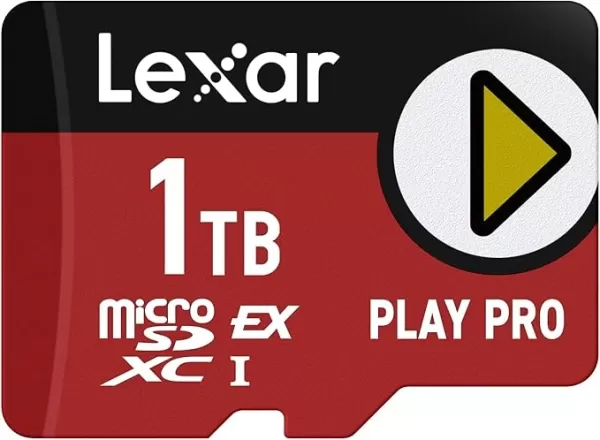
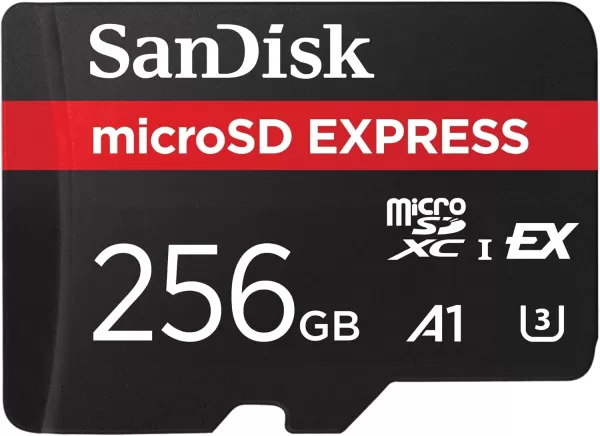
SanDisk, another major player, currently lists a single MicroSD Express card with a maximum capacity of 256GB, which matches the Switch 2's internal storage. As the Switch 2 hits the market, we can expect more options to emerge, especially from companies like Samsung, which are likely to increase production of these high-speed memory cards.
-
For those new to Monster Hunter, Wilds' explosive popularity may appear sudden, but Capcom has spent years refining this global phenomenon. The latest installment is poised to become the franchise's best-selling title yet.Boasting over a million concAuthor : Oliver Feb 20,2026
-
 Elden Ring Nightreign reached a remarkable sales milestone, moving 2 million copies on its very first day.Publisher Bandai Namco confirmed the news, stating, "Pre-orders and initial sales have propelled the game past the incredible 2 million unit marAuthor : Joseph Feb 17,2026

















- Stardew Valley: How To Befriend Willy
- Crunchyroll Game Vault adds Battle Chasers: Nightwar, Dawn of the Monsters, Evan’s Remains and more
- DISCOVERY CHANNEL TO UNVEIL CROSSOVER IN 'Reverse: 1999' 2.0
- Hotta Studio's Open-World RPG, Neverness to Everness, Announced
- Military Strategy Game Warpath Launches a Navy Update with 100 New Ships
- Half-Life 3 Speculations Spark Again as Risk of Rain Original Devs Join Valve's Game Dev Team