
Elden Ring: Redefining Open-World Exploration?
Open-world games have traditionally been bogged down by endless checklists. Maps cluttered with markers, mini-maps dictating every move, and objectives that often felt more like chores than adventures. However, with the arrival of Elden Ring, FromSoftware tossed aside the conventional rulebook, eliminated the hand-holding, and offered players something truly unique: genuine freedom.
In partnership with Eneba, we're diving into the impact Elden Ring has had on the genre and why it's worth your admiration.
A World That Doesn’t Beg for Your Attention
Unlike most open-world games that constantly vie for your attention with incessant pop-ups and reminders, Elden Ring takes a different approach—it whispers. It unfolds a vast, enigmatic world and encourages you to explore it on your own terms.
The game eschews intrusive UI elements, allowing curiosity to be your guide. If something on the horizon piques your interest, go and investigate. You might uncover a hidden dungeon, a formidable weapon, or a grotesque boss eager to challenge you.
One of the standout features is the absence of level scaling. The world remains unchanged; it's up to you to adapt. If an area proves too tough, you can return later, or boldly attempt to confront a dragon at level five with a broken sword—just be prepared for the consequences.
It's never too late to immerse yourself in the Lands Between, especially when you can find an Elden Ring Steam key at Eneba for less than you might expect.
Exploration Feels Like Discovery, Not a Checklist
In many open-world games, exploration is often about efficiency rather than adventure. Players rush from one marker to the next, treating objectives like errands. Elden Ring, however, revolutionizes this concept.
There’s no quest log directing your every move. NPCs offer cryptic clues, distant landmarks beckon without explanation, and the game refrains from spoon-feeding information.
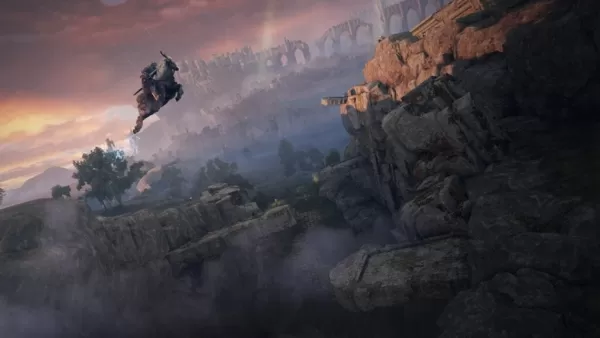 This approach might initially seem daunting, but it's precisely what makes exploration so rewarding. Every cave, ruin, and fortress you stumble upon feels like your own discovery, driven by curiosity rather than a predefined path.
Moreover, unlike games where loot feels like a random drop, Elden Ring ensures that every reward is meaningful. You might find a game-changing weapon or a spell that allows you to summon a literal meteor storm in a hidden cave.
The Joy of Getting Lost (and Surviving)
Most games view getting lost as a setback, but in Elden Ring, it's an integral part of the experience. You might take a wrong turn and end up in a notorious poison swamp. You could wander into what appears to be a serene village, only to be ambushed by monstrous creatures. These moments contribute to the world feeling dynamic and alive.
While the game doesn't guide you by the hand, it does leave subtle hints. A statue might gesture toward an underground treasure, or a cryptic NPC could hint at a hidden boss. If you're attentive, the world gently nudges you forward without dictating your path.
Open-World Games Will Never Be the Same?
Post-Elden Ring, the landscape of open-world games has shifted irrevocably. FromSoftware has demonstrated that players don't require constant guidance to relish an open world; they crave mystery, challenge, and the thrill of discovery. We can only hope that other developers will follow suit.
If you're eager to immerse yourself in a world that not only encourages but demands exploration, digital marketplaces like Eneba offer fantastic deals on gaming essentials. Whether it's Elden Ring or other must-play titles, your next adventure awaits, just a few clicks away.
-
 Celebrating its first anniversary, Sword of Convallaria launches a major content update, delivering both fresh gameplay and the climactic conclusion to its year-long narrative arc. Players invested in Iria's unfolding saga will finally witness the drAuthor : Ethan Mar 16,2026
 -
One of the PlayStation Plus free games for May 2025 appears to have been leaked. Sony has not officially confirmed the titles yet, but rumors suggest the teen slasher horror adventure Until Dawn will be free for PlayStation Plus subscribers in May. BAuthor : Isaac Mar 16,2026

















- Stardew Valley: How To Befriend Willy
- DISCOVERY CHANNEL TO UNVEIL CROSSOVER IN 'Reverse: 1999' 2.0
- Crunchyroll Game Vault adds Battle Chasers: Nightwar, Dawn of the Monsters, Evan’s Remains and more
- Hotta Studio's Open-World RPG, Neverness to Everness, Announced
- Military Strategy Game Warpath Launches a Navy Update with 100 New Ships
- Half-Life 3 Speculations Spark Again as Risk of Rain Original Devs Join Valve's Game Dev Team