
"Assassin's Creed 2 and 3: The Pinnacle of Series Writing"
One of the most unforgettable moments in the Assassin's Creed series unfolds early in Assassin's Creed 3, as Haytham Kenway concludes his recruitment of what appears to be a band of assassins in the New World. Initially, players might be fooled into believing these are allies, given Haytham's use of a hidden blade and his charismatic demeanor reminiscent of Ezio Auditore from previous games. Throughout the early stages, Haytham plays the role of a hero, liberating Native Americans from captivity and confronting arrogant British redcoats. However, the truth dawns on players when he utters the iconic Templar phrase, "May the Father of Understanding guide us," revealing that we've been unwittingly following the series' antagonists, the Templars.
This twist exemplifies the peak of Assassin's Creed's storytelling potential. The original game introduced a compelling premise—hunt, understand, and eliminate your targets—but struggled with a lackluster narrative and flat characters. Assassin's Creed 2 improved by introducing the iconic Ezio, yet still fell short in developing his adversaries, with figures like Cesare Borgia in the spinoff Assassin's Creed: Brotherhood feeling particularly one-dimensional. It wasn't until Assassin's Creed 3, set against the backdrop of the American Revolution, that Ubisoft devoted equal attention to both the hunter and the hunted. This approach created a seamless narrative flow and a harmonious blend of gameplay and story, a balance that subsequent entries have yet to match.

Despite the generally positive reception of the current RPG-focused era of Assassin's Creed, many fans and critics agree that the series is experiencing a decline. Debates abound over the causes, ranging from increasingly fantastical elements like battling gods such as Anubis and Fenrir, to the introduction of diverse romance options, and even the use of historical figures like Yasuke in Assassin's Creed Shadows. However, I believe the true reason for this decline is the shift away from character-driven narratives, now overshadowed by expansive sandbox environments.
Over time, Assassin's Creed has evolved from its original action-adventure roots to incorporate numerous RPG and live service elements, including dialogue trees, XP-based leveling systems, loot boxes, microtransaction DLC, and gear customization. Yet, as the games have grown larger, they've begun to feel less fulfilling, not only due to the repetitive side missions but also in terms of storytelling.
For instance, while Assassin's Creed Odyssey offers more content than Assassin's Creed 2, much of it seems superficial and hastily constructed. The addition of player choice through dialogue and actions, intended to enhance immersion, often results in the opposite effect. Extended scripts to accommodate various scenarios can lack the polish of more focused narratives, diluting character depth as protagonists must adapt to the player's whims.
This compromises the immersion, making it evident that players are interacting with digital characters rather than complex historical figures. This starkly contrasts the Xbox 360/PS3 era, which delivered some of the most memorable writing in gaming, from Ezio's passionate speech, "Do not follow me, or anyone else!" after defeating Savonarola, to Haytham's tragicomic soliloquy upon being killed by his son, Connor:
“Don't think I have any intention of caressing your cheek and saying I was wrong. I will not weep and wonder what might have been. I'm sure you understand. Still, I'm proud of you in a way. You have shown great conviction. Strength. Courage. All noble qualities. I should have killed you long ago.”

The narrative quality has also declined in other aspects. Modern games often simplify the moral dichotomy to Assassins = good and Templars = bad, whereas earlier titles delved into the gray areas between the two factions. In Assassin's Creed 3, each defeated Templar challenges Connor's beliefs in their final moments. William Johnson suggests the Templars could have prevented the Native American genocide. Thomas Hickey criticizes the Assassins' idealism, while Benjamin Church argues that perspective shapes reality, with the British viewing themselves as victims rather than oppressors.
Haytham himself attempts to undermine Connor's faith in George Washington, asserting that the new nation would be no less tyrannical than the monarchy the Americans sought to overthrow—an assertion validated when it's revealed that the order to burn Connor's village came from Washington, not Haytham's lieutenant Charles Lee. By the game's end, players are left with more questions than answers, which strengthens the narrative.
AnswerSee ResultsReflecting on the franchise's history, it's clear why "Ezio's Family" from the Assassin's Creed 2 soundtrack, composed by Jesper Kyd, became the series' emblematic theme. The PS3 games, especially Assassin's Creed 2 and Assassin's Creed 3, were fundamentally character-driven experiences. "Ezio's Family" evokes not just the Renaissance setting but Ezio's personal tragedy of losing his family. While I appreciate the expansive world-building and graphical advancements of the latest Assassin's Creed titles, I hope the series can return to its roots with tightly knit, character-focused stories that originally captured fans' hearts. Unfortunately, in today's market, dominated by vast open worlds and live service ambitions, such a return to form might not align with "good business."
-
 This week's free game lineup on the Epic Games Store mobile app is here, and it features DC Heroes United alongside Shapez.Whether you love factory simulations or superhero action, there's something for everyone. The games are free to claim from JuneAuthor : Andrew Apr 24,2026
 -
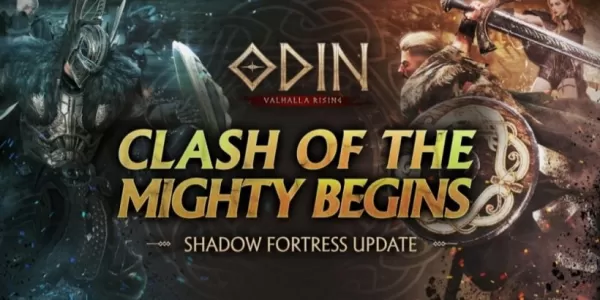 Shadow Fortress is the new elite dungeon featuring high-stakes encountersNew Imprint System lets you push your stats furtherThe Summer Island event features loads of rewards to gatherOdin: Valhalla Rising is turning up the heat this summer with its sAuthor : Camila Apr 22,2026
-
 Tic Tac Toe Online - XO GameDownload
 -
 Evil TowerDownload
 -
 Piano TutorialsDownload
 -
 AlgoRun : Coding gameDownload
 -
 Rummy 500 : The Rummy GameDownload
 -
 Ice Scream 8Download
 -
 Motocross Dirt Bike Race GameDownload
 -
 Ghost Merge offline games 2022Download
 -
 Abobus X Imposter FallsDownload
 -
 4 Fotos 1 PalabraDownload





- Retro-Style Arcade Racer Victory Heat Rally Is Coming To Mobile Soon Via Crunchyroll!
- DISCOVERY CHANNEL TO UNVEIL CROSSOVER IN 'Reverse: 1999' 2.0
- Crunchyroll Game Vault adds Battle Chasers: Nightwar, Dawn of the Monsters, Evan’s Remains and more
- Hotta Studio's Open-World RPG, Neverness to Everness, Announced
- Military Strategy Game Warpath Launches a Navy Update with 100 New Ships
- Golden Joystick Awards 2024 Was a Big Showing for Indie Games