
Game Developer's Walking Dead Fortnite Game: A New Studio Path
The video game industry has been navigating through turbulent times, marked by layoffs, studio closures, and dwindling funding. Enrique Fuentes, CEO and co-founder of Teravision Games, felt this turbulence acutely after the release of their asymmetrical horror game, Killer Klowns From Outer Space, inspired by the 80s film. Despite positive reception, with IGN awarding it a 7 and praising its entertainment value, Teravision found themselves in a challenging position post-launch, mirroring the industry's broader struggles.
"As you know, 2024 was a pretty tough year for the whole industry. So it was a little bit slow for us to close our next project," Fuentes reflects. Despite partnerships with major names like Disney, Nickelodeon, and Xbox, securing a follow-up project proved difficult. With time running out, the studio, boasting developers with 20 years of industry experience, turned to a novel approach: creating games within Fortnite using Unreal Engine for Fortnite (UEFN). In less than a year, Teravision released three UEFN games, with their fourth, Courtyard King, launching today. This game leverages the official The Walking Dead content pack available in UEFN.
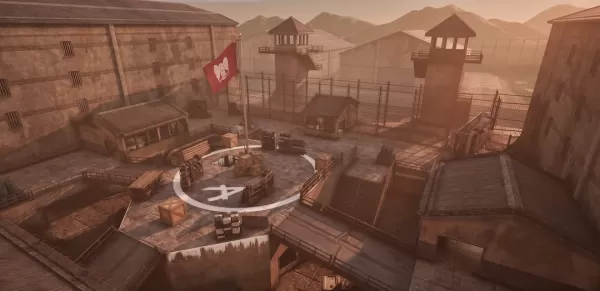
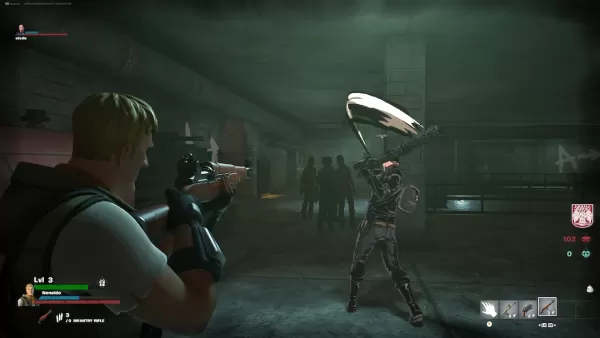
Collaborating with Skybound, the company co-founded by The Walking Dead creator Robert Kirkman, Courtyard King is a King of the Hill-style multiplayer PvPvE game set in the iconic prison location from the series. Players battle each other and NPC zombies for territory control, utilizing official assets like character models of Rick Grimes, Negan, and Daryl Dixon. Beyond assets, Teravision worked with Skybound's writers to develop the game's narrative and dialogue.
"Instead of a multi-year project like Killer Clowns From Outer Space, these are projects that we could put together in weeks or months," Fuentes notes. The shift to UEFN was unexpected for Teravision, who had previously worked with big brands. "We have worked with big brands in the past… and UEFN was something that we were experimenting with… but we never imagined that was going to be the route where we’re going to be engaging with a company like Skybound," Fuentes adds. "But I mean, UGC, it’s one of the biggest things in gaming right now."
User-generated content (UGC) is a significant trend in gaming, particularly facilitated by platforms like Fortnite. While UGC traditionally involves players at home, professional studios creating UGC is a newer concept. Fortnite's Unreal Engine 5-based tools provided an ideal platform for experienced developers like Teravision.
"It made sense because we come from an engineering background and it was a platform where we could experiment in and assume some of the risk," Fuentes explains. This approach allowed Teravision to quickly develop games like Havoc Hotel, a roguelike shooter where players fight through hotel levels, earning currency to upgrade weapons. The success of the first Havoc Hotel led to a series, with Havoc Hotel 3 becoming one of Fortnite's most popular games.
Teravision's game designer, Martin Rodriguez, highlights the ease of transitioning from Unreal Engine to UEFN, noting that the streamlined systems and "drag and drop" processes allowed the team to focus on creating better games and exploring new creative ideas. While the engineering team adapted well to UEFN's tools, the game design team faced unique challenges. Games like Havoc Hotel started as experiments but evolved into standalone experiences.
Teravision's creative director, LD Zambrano, points out that UEFN games differ from traditional games. "A traditional experience we have had designing other [non-UEFN] games is where players relate through objectives that entice cooperation and competition, right?" Zambrano says. "In [UEFN’s] case, we have found that even though those objectives are still relevant and we still can use that game design sensibility and bring them there, I found that there are a lot of experiences that are very popular within the Fortnite ecosystem that are kind of just context."
Zambrano likens UEFN games to schoolyard play. "I have found that there is this way of approaching each other that brings me back to recess, which is you meet somebody and make up some sort of game that might not make sense, but still you’re engaging and creating friendships. That’s what I mean about some of these games becoming a ‘context.’"
A unique aspect of Courtyard King is its infinite gameplay, where matches continue indefinitely, allowing players to join and leave at will, even switching teams. This dynamic fosters scenarios ripe for betrayal, reminiscent of The Walking Dead's themes.
For game developers, UEFN presents both opportunities and challenges. It places them in the sandbox of larger entities like Epic Games or Roblox but offers a way to experiment without exhausting resources, while tapping into a vast player base and major IP assets. "We can actually assume the risk as an indie developer in [UEFN]. Because last year, we couldn’t even think about starting a three-year project. We could do something in a few weeks with a smaller team and that completely changes the paradigm for a new developer," Fuentes states. "This is now a viable model where you can actually support an 80-person studio like we do, and we can assume the risk. It’s something that if you have the right ideas, the right creativity around it, if you understand the market well enough and you have the right thinking, execution becomes possible and it doesn’t take years, it actually takes weeks, maybe months. I think this is a dream come true for indie developers."
-
 Alienware Aurora 16X Intel Core Ultra 9 275HX RTX 5070 (115W) Gaming Laptop (32GB/2TB)$2,249.99 at AlienwareAlienware Aurora 16 Intel Core Ultra 9 270H RTX 5070 (85W) Gaming Laptop (16GB/1TB)$1,949.99 at AlienwareAlienware has unveiled its new mainstAuthor : Skylar Jan 23,2026
 -
Wondering if The Monkey has any post-credits content? Here's the answer: the film doesn't have additional scenes after the credits, but there is a special reward for staying until the very end.Check back this Friday for a full spoiler breakdown of ThAuthor : George Jan 22,2026














- Stardew Valley: How To Befriend Willy
- DISCOVERY CHANNEL TO UNVEIL CROSSOVER IN 'Reverse: 1999' 2.0
- Crunchyroll Game Vault adds Battle Chasers: Nightwar, Dawn of the Monsters, Evan’s Remains and more
- Hotta Studio's Open-World RPG, Neverness to Everness, Announced
- Military Strategy Game Warpath Launches a Navy Update with 100 New Ships
- Half-Life 3 Speculations Spark Again as Risk of Rain Original Devs Join Valve's Game Dev Team