
"New Oblivion: Remake Look, Remaster Feel"
When Bethesda unveiled Oblivion Remastered earlier this week, my initial reaction was one of disbelief. The game that once featured quirky, potato-faced characters and blurry, low-resolution landscapes from 2006 has been transformed into the most visually stunning Elder Scrolls game to date. Given the often underwhelming nature of HD remasters like Mass Effect Legendary Edition and Dark Souls Remastered, which barely differ from their Xbox 360 counterparts, seeing the Imperial City rendered in Unreal Engine 5 with ray tracing was astonishing. Beyond the visual overhaul, the game boasts enhancements in combat, RPG systems, and numerous other details. This led me to question if Bethesda and the developer, Virtuos, had misnamed it. Shouldn't this be Oblivion Remake rather than a remaster?
I wasn't alone in this thought. Many fans and even Bruce Nesmith, a senior designer on the original Oblivion, suggested that the term "remaster" might not fully encapsulate the extent of the changes. Despite my initial skepticism, after spending several hours with the game, it became clear that Oblivion Remastered might look like a remake but plays like a remaster.
The reason Oblivion looks like a remake is straightforward: Virtuos has completely redesigned every single asset from scratch. Every tree, sword, and crumbling castle is brand new, meeting modern graphical standards. The game features stunning textures, beautiful lighting, and a new physics system that realistically affects the world with every arrow and weapon strike. While the characters are the same as those from 2006, every NPC model has been recreated from the ground up. This overhaul aims to exceed the graphical expectations of 2025 rather than merely recreating what players remember. If I had seen this before the remaster rumors, I might have mistaken it for The Elder Scrolls 6.
However, it's not just about visuals. Combat has been significantly improved, making swinging a longsword feel more realistic than ever. The third-person camera now includes a functional reticule, and all menus, from the quest journal to dialogue and minigames, have been refreshed. The original leveling system has been replaced with a more intuitive hybrid of Oblivion and Skyrim's approaches, and players can now sprint. With such extensive visual and gameplay enhancements, it's tempting to consider this a remake.
The debate over whether Oblivion Remastered should be called a remake or a remaster hinges on the lack of clear industry standards for these terms. Publishers often use them interchangeably, leading to confusion. For example, Rockstar's "Definitive Edition" remasters of the Grand Theft Auto trilogy retain their PlayStation 2-era blockiness with some texture and lighting upgrades, while the Crash Bandicoot N. Sane Trilogy, also labeled a remaster, features entirely new graphics that look modern. Remakes like Shadow of the Colossus and Demon's Souls by Bluepoint rebuild games from scratch but remain faithful to the originals, whereas Resident Evil 2 redesigns gameplay while sticking to the original structure. Final Fantasy 7 Remake and Rebirth take even more liberties, overhauling design, script, and story.
Historically, a game rebuilt from scratch in a modern engine was considered a remake, while remasters were seen as more limited upgrades within the original technology. However, these definitions are becoming outdated. A more fitting definition today might classify a remaster as a graphical overhaul that preserves the original game's design with some quality-of-life improvements, while a remake redesigns the game entirely. This would categorize Demon's Souls and Metal Gear Solid: Delta as remasters, reserving the term "remake" for games that truly reinvent the original.
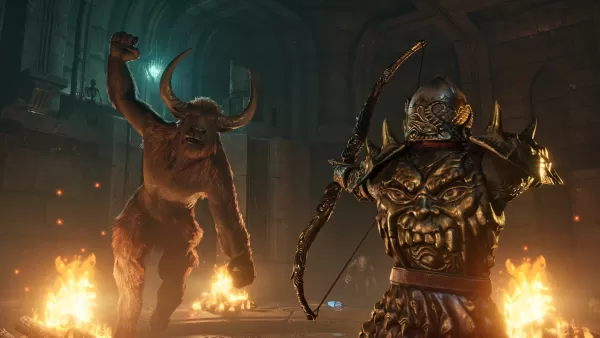 New lighting, fur, and metallic effects are just the tip of the iceberg of Oblivion Remastered's changes. Image credit: Bethesda / Virtuos
Using these definitions, Oblivion Remastered is aptly named. While it boasts new assets and Unreal Engine 5 ray tracing, it retains the core mechanics and feel of the original game. Bethesda emphasized, "We looked at every part and carefully upgraded it. But most of all, we never wanted to change the core. It's still a game from a previous era and should feel like one."
The hallmarks of that era are evident throughout. From the loading screens behind every door to the perplexing persuasion minigame, the simplistic city designs, and the awkwardly wandering NPCs, Oblivion Remastered maintains its original charm. Even the combat, despite significant improvements, still feels somewhat detached and unwieldy, and many bugs and glitches remain, preserving the game's quirky nature.
Recent games like Obsidian's Avowed showcase the evolution of RPG elements, highlighting how Oblivion Remastered's mechanics feel dated by comparison. However, Oblivion still shines with its enchanting world, filled with mysteries and oddities. Its ambition, such as the dynamic goblin wars and engaging quest structures, remains impressive. The game's old-school approach to player freedom feels refreshing in today's more guided gaming landscape. Yet, the granular details, like dialogue and system interconnectivity, reveal its age. A true remake would update these elements, but Oblivion Remastered is about reliving the original experience.
In the world of movies, remakes are new productions with fresh casts and scripts, while remasters enhance existing films to meet modern standards. Oblivion Remastered mirrors this concept, pushing visual quality to its limits by recreating the game's "exterior" in a new engine, but it remains a product of the 2000s at its core. As Alex Murphy, executive producer at Virtuos, aptly put it during the reveal stream, "We think of the Oblivion game engine as the brain and Unreal 5 as the body. The brain drives all the world logic and gameplay and the body brings to life the experience that players have loved for almost 20 years."
Oblivion Remastered is precisely what it claims to be, and its achievements should not be downplayed. Rather than insisting it's a remake, we should recognize it as the benchmark for remasters by major AAA companies. This is what Mass Effect Legendary Edition and Grand Theft Auto: The Trilogy should have aspired to be. Oblivion Remastered combines the visual prowess of a remake with the nostalgic essence of a remaster, crafted with passion and preserved with love.
-
 Squishmallows Makes Its Mobile Debut with Charming Match-Three GameThe beloved plush collection phenomenon now arrives on mobile with Squishmallows Match, bringing its signature colorful characters to match-three puzzles. Launching September 2nd on iAuthor : Connor Mar 08,2026
 -
 The first public playable demo for MARVEL Tōkon: Fighting Souls will debut at EVO 2025. This article covers what to expect from the demo and details on the developer panel taking place during the event.MARVEL Tōkon: Fighting Souls Makes Its Way to EVAuthor : Leo Mar 05,2026
-
 名言まとめDownload
 -
 Escape from the ShadowsDownload
 -
 Bingo ChampsDownload
 -
 Stupid Zombies 4Download
 -
 Dragon's Gold Flames Vegas Casino SlotsDownload
 -
 Project HighwayDownload
 -
 Charades and other party games - Lexis PexisDownload
 -
 Backgammon V+Download
 -
 Teen Patti family HeartDownload
 -
 Ultimate Golf!Download






- Retro-Style Arcade Racer Victory Heat Rally Is Coming To Mobile Soon Via Crunchyroll!
- Crunchyroll Game Vault adds Battle Chasers: Nightwar, Dawn of the Monsters, Evan’s Remains and more
- DISCOVERY CHANNEL TO UNVEIL CROSSOVER IN 'Reverse: 1999' 2.0
- Hotta Studio's Open-World RPG, Neverness to Everness, Announced
- Military Strategy Game Warpath Launches a Navy Update with 100 New Ships
- Half-Life 3 Speculations Spark Again as Risk of Rain Original Devs Join Valve's Game Dev Team